
With hurricanes and tornadoes in an upward trend, home resilience: impact-resistant roofs in particular are important to invest in. In wet climates, flood events have doubled since 1990, and we have had above average precipitation every year between 2015-2025 (Wagner Watts and Andes, 2025). In dry climates, fires are increasingly common, hotter and more damaging.
Storms involving wind (hurricanes and tornadoes) and water (flooding and hail) are becoming more frequent and damage is more expensive (Wagner Watts and Andes, 2025). While some areas are most prone to damage, nearly all areas are susceptible to occasional damage. For example, California is dry but it does rain and can flood. Furthermore, building code tends to change based on history but is not keeping up with changes in climate. Experts Wagner Watts and Andes (2025) estimate that resilience my cost 15-20% more, but showed that resilient buildings can survive storms average buildings do not.
My Experience
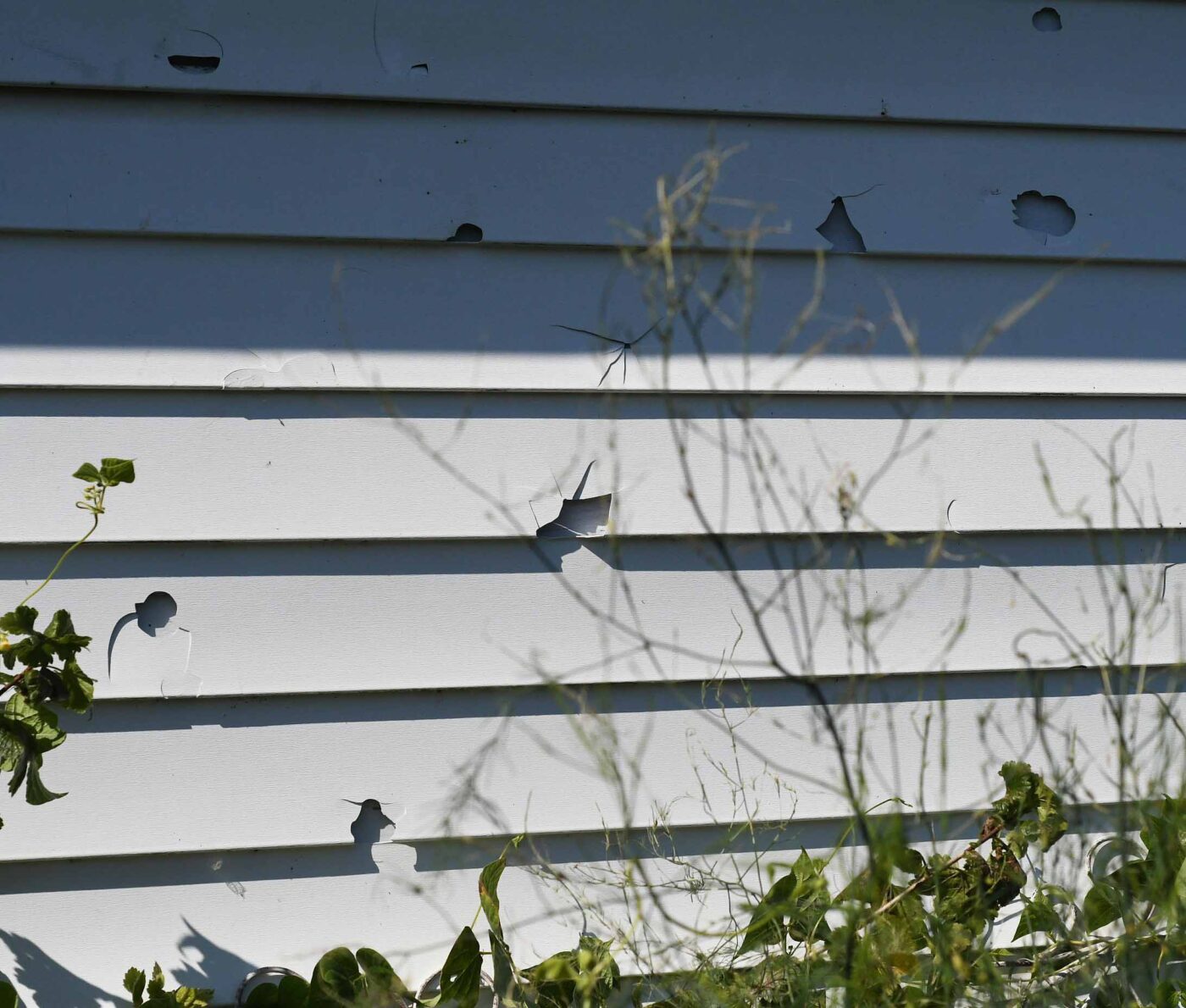
A hailstorm in 2025 with 2-inch hail caused damage to our roof and garage siding (shown in the photo above). My roof shingles looked fairly normal to me but disaster-chasing experts descended indicating that small bald spots on the shingles, where the colored stones had washed away, meant that those shingles were thinner there and prone to aging and leaking. In addition, it was obvious my garage siding needed replacing on the south side and one window was broken.
Insurance paid for a replacement of my roof (and many of my neighbors’) and one side of our garage’ siding. I took advantage of the situation by looking into resilient roofs that were more likely to survive future storms. I purchased Class 4 roofing for maximum home resilience. It cost me slightly more than the insurance paid, but there are two advantages: 1) I hope to survive future hail and wind storms; and 2) I will earn a discount with my insurance.
Your Choices
| Options and Links for Home Resilience: Roofs | Usefulness |
| Choose Wind and Hail Impact-Resistant Roofs | Anywhere east of the Rocky Mountains |
| Choose Fire-Resistant Roofs | Anywhere, but particularly wildfire-prone areas |
| Selecting Siding | Introductory section |
| Considering Other Upgrades | For sophisticated users |
| Save Home Energy | Parent Page: Reducing energy and costs to personally minimize climate change with your home |
Choose Wind and Hail Impact-Resistant Roofs
Whether airborne debris or golf-ball sized hail flies into your roof, it is important for your roof to survive the impact. This Old House (2025) writes that roofing shingles are certified into one of four categories based upon Underwriters Laboratories standards and commercial testing:
- Class 1: Can withstand a 1.25-inch steel ball dropped twice from 12 feet
- Class 2: Can withstand a 1.5-inch steel ball dropped twice from 15 feet
- Class 3: Can withstand a 1.75-inch steel ball dropped twice from 17 feet
- Class 4: Can withstand a 2-inch steel ball dropped twice from 20 feet
This Old House (2025) recommends impact-resistant roofs because they withstand stronger winds; may advertise longer-lasting 50-year roofs; may earn insurance discounts; and may be made of recycled materials. When purchasing a roof, evaluate the wind rating: 110 miles per hour (mph) is standard. Impact-resistant class 4 roofs advertise withstanding winds to 130 mph or Class 4 hurricane winds (This Old House, 2025).
Roofs tend to peel off starting at the edge, so edge materials are important and are often prefabricated and/or made of metal. Gutters need to be well-secured. Impact-resistant roofs tend to have thicker roof membranes (80 mm), higher density substrates, and highly compressed cover boards (Wagner Watts and Andes, 2025).
What areas are prone?
Areas susceptible to climate disasters include (Wagner Watts and Andes, 2025):
- Tornado-Prone Region: East of the Rockies, starting with Montana, Wyoming, Colorado, Texas, and states east of these.
- Hail Alley: Central United States get the most damage. Red zone areas includes Minnesota and the Dakotas down to Texas, including Iowa, Illinois, Nebraska, Colorado, Missouri and Kansas. Other states that have encountered hail damage includes Pennsylvania, Delaware, Ohio and North Carolina. Yellow zone areas include Wisconsin (see photo above), Indiana, Ohio, Kentucky, Tennessee, Virginia, the Carolinas, Georgia, Alabama and Florida.
- Hurricane Prone: The Atlantic Coast, starting along Texas coast and up to (but minimally affecting) Maine, including all of Florida.
Choose Fire-Resistant Roofs
Roofs earn fire-resistant ratings as Class A (best), Class B, Class C and unrated (lowest rated or unknown). Fire resistance depends upon the materials that the shingles are made from, with Class A roofing made from asphalt glass fiber, clay, concrete or slate tiles. Class A roofing can also include assembly-rated coverings, which are materials combined to form a higher level of fire resistance. These may include some recycled rubber or plastic composites, metal roofs, and fire-retardant treated roofs (UC ANR, N.D.).
Testing occurs by putting a wood square directly on the roof sample, setting the wood on fire, and using a 12-mile per hour wind to blow over the wood and roof (Quarles, 2005). In Class A testing, fire should not be observed under the roof. Also, the sizes of the wood-burning platforms vary in size from 1 foot by 1 foot for Class A, to an ice cube sized piece for Class C official tests.
Selecting Siding
Holladay (2017) calls vinyl siding “durable, weather resistant, low maintenance and durable” while also admitting it is made from chlorine and fossil fuels and potentially other toxins. It is not recyclable and releases toxic smoke when burning, which is hazardous to fire fighters. However, it remains a better option than most alternatives.
Considering Other Upgrades
Resistant windows can help in wind-prone areas.
Where flooding is a concern, consider (Wagner Watts and Andes, 2025):
- blue roofs hold some water on flat roofs to minimize flash flooding, more common on large business roofs;
- green roofs support plants to retain water, clean air, cool building internally;
- rain water collection.
References
A. Wagner Watts and E Andes (2025) Designing Roofs to Withstand Natures’ Worst, Building Enclosure (video), 16 October 2025.
This Old House (2025) Impact-Resistant Roofs: Pros, Cons, and Types, This Old House, https://www.thisoldhouse.com/roofing/impact-resistant-roof
UC ANR (N.D.) Homeowner’s Wildfire Mitigation Guide: Roof Covering, University of California, Agriculture and Natural Resources. From: https://ucanr.edu/site/homeowners-wildfire-mitigation-guide/roof-covering.
S. L. Quarles (2005) What is a Safe Roof? HOME and Fire, Spring 2005. From: https://ucanr.edu/sites/default/files/2011-05/91485.pdf